
Low Rates.
Easy Applications.
Quick Closings.
Low Rates.
Easy Applications.
Quick Closings.
Our rates are low, our application is quick and easy! We can get you clear to close in as little as 10 days!
Trusted By Agents With







Are You Looking to Purchase or Refinance a Home?
The Client Experience
As mortgage brokers, we have had the pleasure of working with hundreds of families to help them with their home purchase or refinance needs. Knowing that our clients are making a significant investment, we strive to make the loan process as smooth and stress-free as possible for them.
Throughout our careers, we have made it our mission to provide exceptional customer service to all of our clients. We are committed to working closely with them to understand their unique financial goals and needs, and to provide personalized service that is tailored to their specific situation.
Loan Programs Available





Blogs
The Top 5 Mortgage Mistakes to Avoid

Buying your first home can be both exciting and nerve-wracking at the same time. With so many things to consider and....
Mortgage Do and Do not list

Mortgages can be tricky, and it's easy to make mistakes that can end up costing you dearly. That's why we've put together this list....
Tips On How To Improve Your Credit Score

Let's talk about some ways you can improve your credit score! Your credit score is actually a big deal, and it can affect...
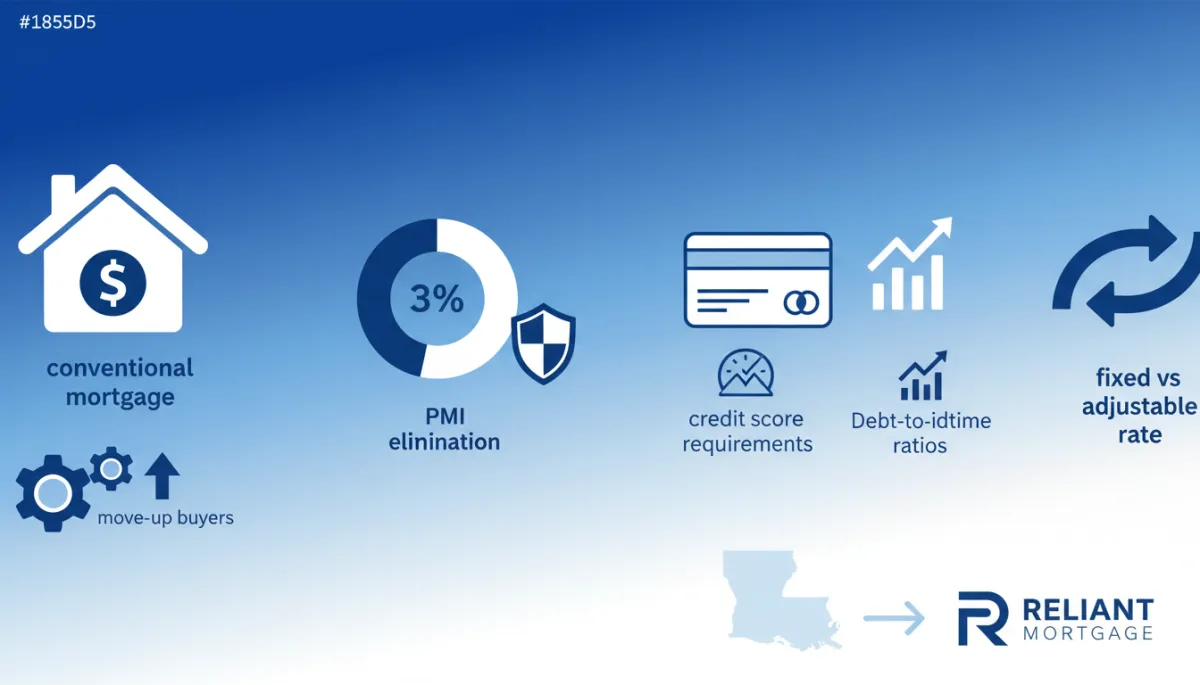
Guide to Conventional Loans in Louisiana
Mortgage Education, Conventional Loans Louisiana
Conventional Mortgage Loans in Louisiana: A Complete Guide for Move‑Up, Repeat, and Second‑Home Buyers
Learn how conventional mortgage options in Louisiana work, what it takes to qualify, and how Reliant Mortgage of Acadiana can help you finance your next home, second home, or investment property with confidence.
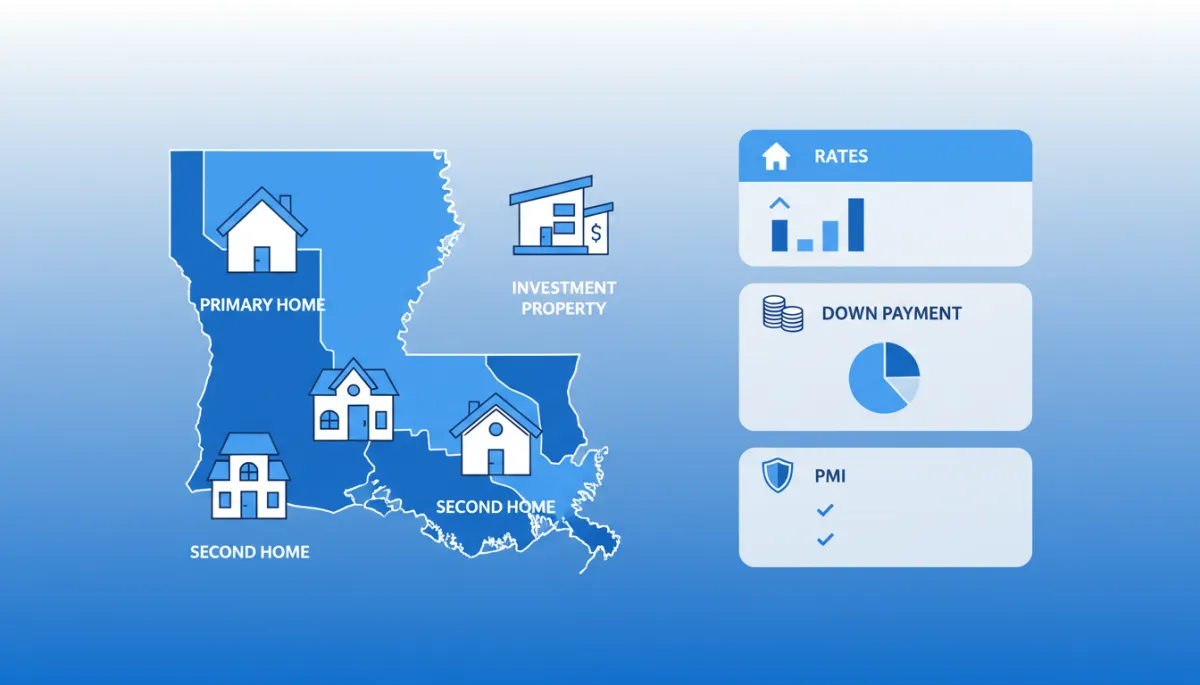
What Is a Conventional Mortgage Loan?
A conventional mortgage is a home loan that is not insured or guaranteed by a government agency such as FHA, VA, or USDA. Instead, it follows guidelines set by private investors and by Fannie Mae and Freddie Mac, the two major government‑sponsored enterprises that buy and securitize many conventional loans. For buyers in Louisiana who are moving up, purchasing a second home, or adding an investment property, conventional loans often provide the most flexibility and long‑term value.
In practical terms, conventional loans Louisiana typically offer:
- Competitive fixed and adjustable interest rate options
- Down payments starting as low as 3% for qualifying borrowers
- The ability to finance second homes and investment properties more easily than with many government‑backed programs
For well‑qualified buyers, conventional mortgages can unlock strong pricing, more control over PMI mortgage Louisiana options, and clearer paths to removing mortgage insurance over time. As of early September 2026, benchmark 30‑year fixed conventional rates in Louisiana generally range around the mid‑6% level for highly qualified borrowers, according to statewide data from MonitorBankRates and Rate Direct, though your actual rate will depend on your profile and property type.
Conforming vs. Jumbo Conventional Loans in Louisiana
Not all conventional loans are the same size. The industry divides them into conforming and jumbo categories based on loan limits set each year by the Federal Housing Finance Agency (FHFA). For 2026 in Louisiana, the baseline conforming loan limit is $832,750 for a one‑unit property, with higher limits for two‑ to four‑unit properties statewide, according to Homebuyer.com. Because Louisiana does not have designated high‑cost areas, these limits apply across all parishes.
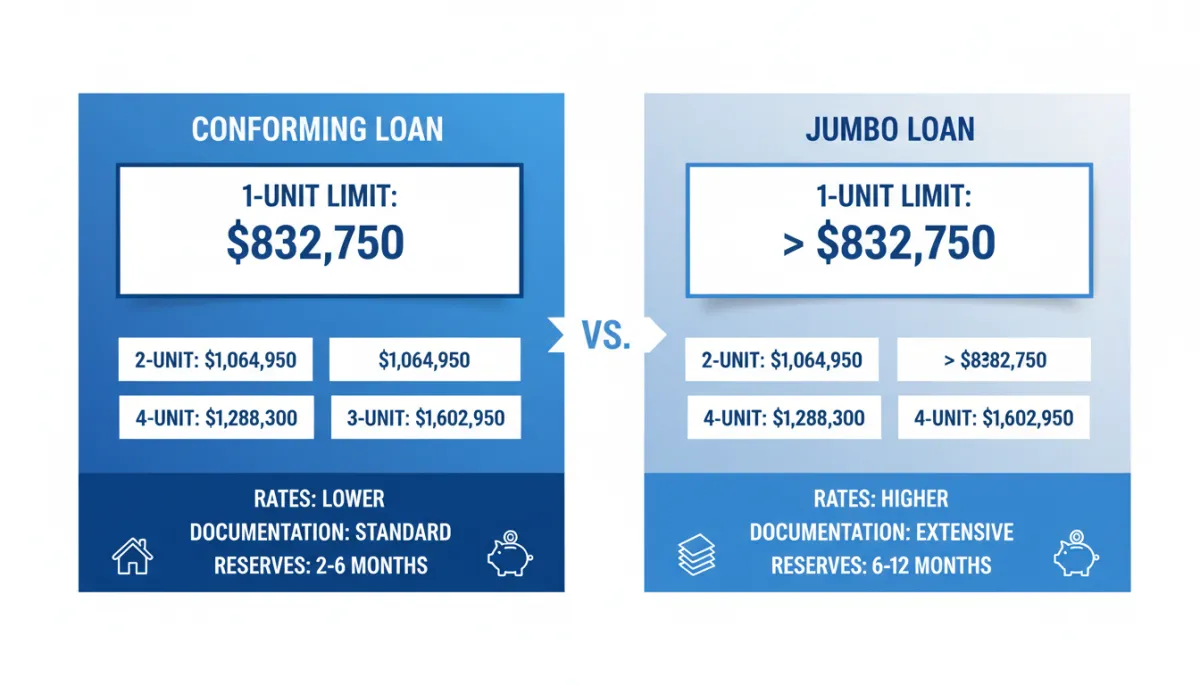
Knowing conforming limits helps Louisiana buyers plan for larger homes or multi‑unit investments.
Conforming Conventional Loans
A loan is considered conforming when it meets Fannie Mae or Freddie Mac guidelines and falls at or below the applicable loan limit. For most move‑up and repeat buyers in Acadiana, a conforming conventional mortgage will be the default choice, especially for:
- Primary residences in the $200,000–$700,000 range
- Second homes along the Gulf Coast or in lake communities within the limit
- One‑ to four‑unit investment properties staying within the conforming caps
Jumbo Conventional Loans
A jumbo loan is any conventional mortgage that exceeds the conforming limit for the property type and parish. These loans are funded by private investors and carry their own underwriting standards. Jumbo financing is common for:
- Luxury primary residences in desirable school districts or urban cores
- High‑end second homes and vacation properties along the coast or in resort areas
- Larger multi‑unit investment properties with higher purchase prices
Jumbo loans typically require stronger credit, larger down payments, and more documented assets than conforming loans. However, for financially established buyers, they can be an effective way to acquire higher‑value properties without multiple smaller loans. Reliant Mortgage of Acadiana can help you evaluate whether your scenario fits best into a conforming or jumbo structure and what that means for pricing and documentation.
Down Payment Options: Starting from 3%
One of the key advantages of a conventional mortgage is the range of down payment choices. While many move‑up and repeat buyers in Louisiana prefer to put 10–20% down, conventional loan programs can go as low as 3% for qualified borrowers, according to current national guidelines summarized by NerdWallet. This flexibility allows you to keep more cash available for renovations, reserves, or additional investments, while still moving forward with your purchase.
Common Conventional Down Payment Tiers
- 3% Down – Available on many conforming primary‑residence loans for eligible borrowers. This is useful for buyers with strong income and credit who prefer to retain liquidity or who are moving up sooner than expected and have less equity from the previous sale.
- 5–10% Down – A popular range for move‑up buyers who want to balance monthly payment, interest rate, and cash on hand. This tier can improve pricing compared with 3% down and may reduce private mortgage insurance costs.
- 15–19.99% Down – Attractive for second‑home and investment buyers who want stronger pricing and lower PMI but do not wish to reach the full 20% threshold.
- 20%+ Down – Eliminates PMI and often secures the most favorable combination of rate, payment, and long‑term cost for well‑qualified borrowers.
PMI Mortgage in Louisiana: How It Works and How to Eliminate It
When your down payment is below 20%, most conventional loans require private mortgage insurance (PMI). PMI protects the lender, not the borrower, in case of default, but it is what makes low‑down‑payment conventional financing possible. For a PMI mortgage Louisiana borrowers typically pay an annual premium ranging from roughly 0.58% to 1.86% of the loan amount, according to LendingTree data, either as a monthly fee, an upfront cost, or a combination of both.
Types of PMI on Conventional Loans
- Borrower‑Paid PMI (BPMI) – The most common structure. You pay a monthly premium as part of your mortgage payment. Under federal law, you may request cancellation once your loan‑to‑value (LTV) reaches 80%, and the servicer must automatically terminate PMI at 78% LTV if you are current on payments, as outlined by the Consumer Financial Protection Bureau (CFPB).
- Lender‑Paid PMI (LPMI) – The lender pays the insurance cost, and you accept a slightly higher interest rate. LPMI typically cannot be canceled, so it may be less attractive for long‑term holders but can make sense for buyers planning to refinance or sell in a shorter time frame.
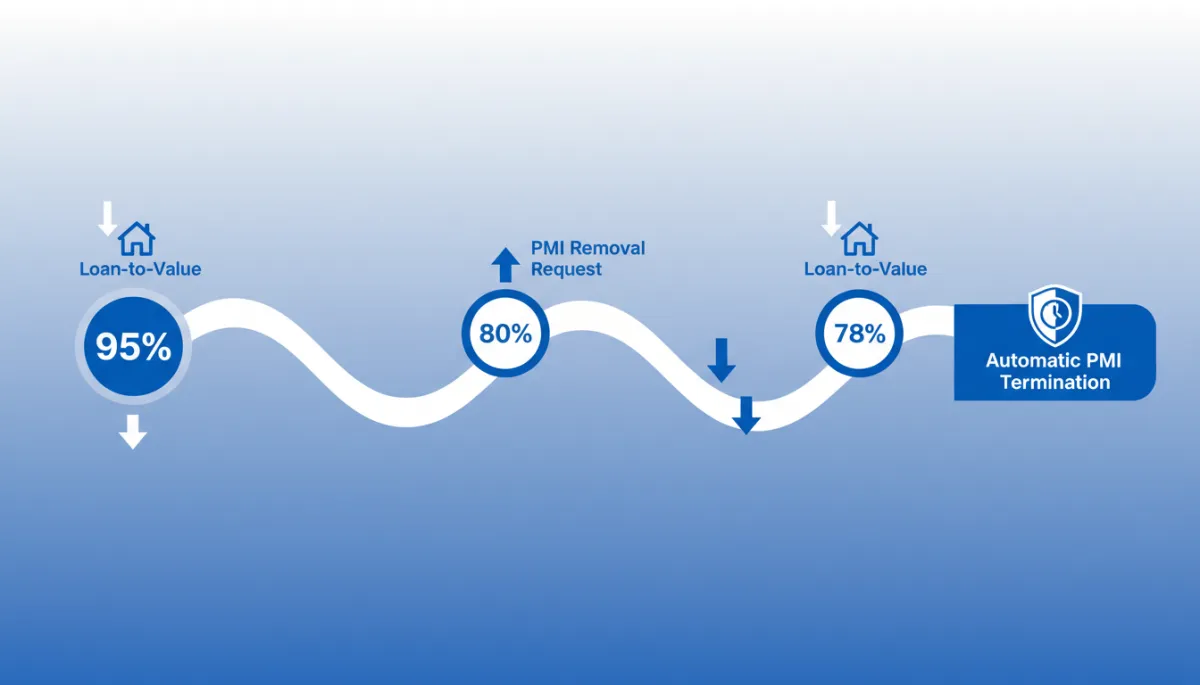
Strategic prepayments and appreciation can help Louisiana borrowers remove PMI sooner.
Strategies to Remove PMI Faster
- Make Extra Principal Payments: Even modest additional payments each month can accelerate your path to 80% LTV, especially in the early years of a 30‑year loan.
- Leverage Home Price Appreciation: In appreciating Louisiana markets, you may reach 80% LTV sooner than scheduled. Your servicer may require a professional appraisal to confirm the increased value before removing PMI.
- Refinance When Conditions Improve: If rates fall or your credit profile strengthens, refinancing into a new conventional loan without PMI can reduce both your rate and monthly payment, provided your equity is at least 20%.
Conventional Loan Requirements: Credit Score, DTI, and Documentation
Credit Score Requirements
For most lenders, the minimum credit score for a conventional mortgage is around 620, as reflected in NerdWallet’s summary of Fannie Mae and Freddie Mac guidelines. Fannie Mae’s Selling Guide specifies a minimum of 620 for fixed‑rate loans and 640 for adjustable‑rate mortgages, though individual lenders may impose slightly higher internal thresholds. Automated underwriting systems can occasionally approve borrowers with lower scores when compensating factors are present, but in practice, 620 remains the key benchmark for many conventional loan requirements.
That said, stronger credit typically leads to better pricing. Borrowers with scores in the 740–780+ range often qualify for the most competitive rates and lower PMI premiums. For move‑up and investment buyers in Louisiana, taking time to address credit issues—such as high revolving balances or isolated late payments—before applying can significantly improve the economics of your next purchase.
Debt‑to‑Income (DTI) Ratios
Your debt‑to‑income ratio (DTI) compares your total monthly debt obligations—including the new mortgage payment—to your gross monthly income. For conventional loans, most lenders prefer DTIs at or below 36%, though many will approve qualified borrowers with DTIs up to approximately 43–45%, depending on credit, reserves, and other factors, according to national guidance cited by NerdWallet.
- A lower DTI signals more financial breathing room and may support better pricing or approval for larger loan amounts, including second homes and rentals.
- A higher DTI can still be acceptable if you have strong credit scores, significant cash reserves, or substantial equity in existing properties.
For investment properties, projected rental income may be used to help offset the new mortgage payment, subject to program rules and appraisal requirements. Reliant Mortgage’s loan officers can model different scenarios to show how your DTI will look with various property types and loan structures.
Other Key Conventional Loan Requirements
- Stable Income and Employment: Typically at least two years of consistent income in the same field, verified through W‑2s, tax returns, and pay stubs, or business financials for self‑employed borrowers.
- Verifiable Assets: Bank statements, retirement accounts, and other liquid assets are reviewed to confirm down payment funds and required reserves, especially for second homes and investment properties.
- Acceptable Property Type: Conventional guidelines vary slightly for primary residences, second homes, and investment properties. Condominiums, multi‑unit properties, and certain rural homes may require additional documentation or review.
Conventional vs. FHA Loan: Which Is Better for Your Situation?
Buyers often compare a conventional vs FHA loan when planning a purchase in Louisiana. Both options can be effective, but they serve different borrower profiles and goals—especially for move‑up, repeat, and investment buyers.
- Conventional Loans typically work best for borrowers with at least fair‑to‑good credit (620+) and the ability to put at least 3–5% down. They offer cancellable PMI, broader options for second homes and investment properties, and more flexibility on property types. For stronger borrowers, conventional loans often provide lower long‑term costs than FHA, even if the initial rate is similar.
- FHA Loans are backed by the Federal Housing Administration and are designed primarily for first‑time or credit‑challenged buyers. They allow lower scores and higher DTIs but require an upfront mortgage insurance premium and ongoing monthly insurance that may last for the life of the loan, depending on your down payment and program rules.
For established Louisiana homeowners, especially those purchasing a larger primary residence, a second home at the lake, or a rental duplex in Acadiana, the flexibility and long‑term savings of a conventional mortgage often outweigh the benefits of FHA. Reliant Mortgage can prepare side‑by‑side comparisons so you can see the true cost of conventional vs FHA loan options over the period you expect to hold the property.
Fixed‑Rate vs. Adjustable‑Rate Conventional Mortgages
Conventional loans in Louisiana are available with both fixed‑rate and adjustable‑rate mortgage (ARM) structures. The right choice depends on your time horizon, risk tolerance, and broader financial strategy as a move‑up or investment buyer.
Fixed‑Rate Conventional Loans
- The interest rate and principal‑and‑interest payment remain constant for the entire term (typically 15, 20, or 30 years).
- Ideal for buyers who plan to own the property long term or prefer maximum payment stability, such as families moving into a “forever home” or investors seeking predictable cash flow.
Adjustable‑Rate Conventional Loans (ARMs)
- ARMs typically offer a lower introductory rate for a fixed period (such as 5, 7, or 10 years), after which the rate adjusts periodically based on a market index plus a margin, subject to caps.
- They can be attractive for buyers who expect to sell, refinance, or pay down the loan significantly before the first adjustment period, such as investors repositioning a property or buyers planning a move for career reasons.
Fannie Mae guidelines generally call for slightly higher minimum credit scores on ARMs (around 640) compared with fixed‑rate loans. Reliant Mortgage will walk you through the trade‑offs, including worst‑case payment scenarios, so you can make an informed decision between fixed and adjustable conventional loans Louisiana offerings.
How to Apply for a Conventional Mortgage with Reliant Mortgage of Acadiana
Securing the right conventional mortgage begins with a clear, structured application process. Reliant Mortgage of Acadiana specializes in guiding Louisiana buyers—from move‑up families to seasoned investors—through each step, from pre‑approval to closing. Here is what the process typically looks like:
- Initial Strategy Conversation: You will discuss your goals, whether that is a larger primary residence, a second home, or a new rental property. Your loan officer will outline likely conventional loan requirements based on your profile and property type, and explain how today’s Louisiana rate environment may affect your options.
- Pre‑Approval and Documentation: You will complete a secure online application and upload income, asset, and identity documents. Reliant’s team will obtain your credit report, calculate your DTI, and issue a pre‑approval letter that strengthens your purchase offers in competitive markets.
- Loan Program Design: Your loan officer will present tailored scenarios—such as 5% down vs. 10% down, different PMI structures, and fixed vs ARM options—so you can choose a structure that fits your cash flow and long‑term plans. For second homes and investment properties, they can also model rent assumptions and tax considerations in collaboration with your financial advisor or CPA.
- Processing, Appraisal, and Underwriting: Once you are under contract, Reliant coordinates the appraisal, verifies your documentation, and submits your file to underwriting. The team keeps you and your real estate agent informed at each milestone, helping to prevent surprises and keep the closing on schedule.
- Closing and Post‑Closing Support: At closing, you will sign the final loan documents and receive a clear explanation of your payment, escrow, and PMI details. After closing, Reliant remains a resource for questions about refinancing, removing PMI, or financing additional properties as your portfolio grows.
Putting It All Together: Is a Conventional Mortgage Right for You?
For many move‑up and repeat buyers, as well as second‑home and investment property purchasers in Louisiana, a conventional mortgage offers the best balance of flexibility, cost, and long‑term control. With down payment options beginning at 3%, clear paths to eliminating PMI, and the ability to finance a wide range of property types, conventional loans remain the backbone of residential real estate financing in the state.
Comparing conventional vs FHA loan choices, understanding your conventional loan requirements around credit score and DTI, and selecting the right mix of fixed or adjustable rates and PMI structure can seem complex. Partnering with an experienced, Louisiana‑based lender like Reliant Mortgage of Acadiana ensures that these decisions are made with clear data, local market insight, and a focus on your long‑term financial plan—not just on getting to closing.
Whether you are upsizing within Acadiana, purchasing a weekend retreat, or expanding your rental portfolio, Reliant Mortgage is prepared to help you design and secure the conventional loans Louisiana solution that fits your goals today and supports your wealth‑building strategy for years to come.

10 Tips for First-Time Homebuyers

Buying your first home can be both exciting and nerve-wracking at the same time. With so many things to consider and....
How To Choose the Right Lender for You

Lorem Ipsum is simply dummy text of the printing and typesetting industry. Lorem Ipsum has been the industry's standard dummy
Refinancing youe loan and when to do it

Lorem Ipsum is simply dummy text of the printing and typesetting industry. Lorem Ipsum has been the industry's standard dummy
© Copyright 2026 McBride Mortgage Services @ Reliant Mortgage. All rights reserved
.McBride Mortgage Services @ Reliant Mortgage
. - NMLS: 1075152 | 208 Centre Sarcelle Blvd Ste 200, Youngsville, La 70592 | Main office: 4114 Toulouse St, New Orleans, LA 70119
.
Notice To Texas Loan Applicants: Consumers wishing to file a complaint against a mortgage banker, or a licensed mortgage banker residential mortgage loan originator, should complete and send a complaint form to the Texas Department of Savings and Mortgage Lending, 2601 North Lamar, Suite 201, Austin, TX 78705. Complaint forms and instructions may be obtained from the department’s website at www.sml.texas.gov
.
A toll-free consumer hotline is available at 1-877-276-5550. The department maintains a recovery fund to make payments of certain actual out of pocket damages sustained by borrowers caused by acts of licensed mortgage banker residential mortgage loan originators. A written application for reimbursement from the recovery fund must be filed with and investigated by the department prior to the payment of a claim. For more information about the recovery fund, please consult the department’s website at www.sml.texas.gov